
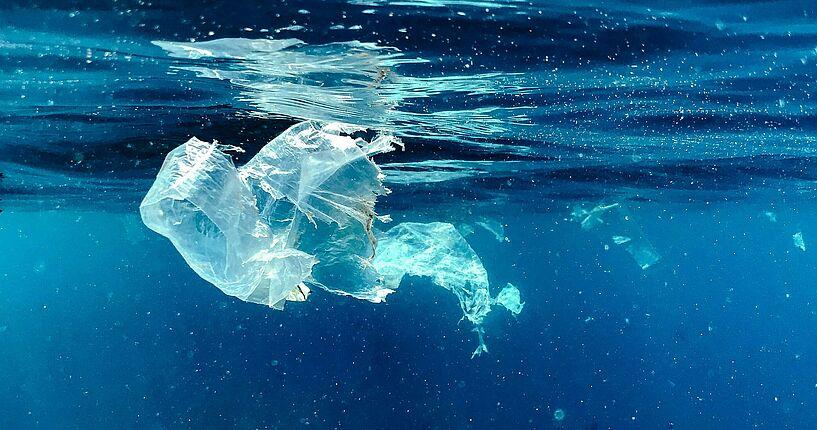
The AI for Detecting Ocean Plastic Pollution with Tracking (ADOPT) project at the Swiss Federal Institute of Technology Lausanne (EPFL) is using artificial intelligence (AI) and drift prediction models to detect and track patches of plastic waste in the oceans. According to a statement, the project is being carried out by EPFL’s Environmental Computational Science and Earth Observation Laboratory (ECEO) and the Swiss Data Science Center (SDSC) in collaboration with Wageningen University in the Netherlands.
ADOPT aims to develop two types of satellites. “One is to identify garbage patches by analyzing satellite images,” ECEO scientist Emanuele Dalsasso is quoted as saying. “The other is to predict where the patches will have drifted by the time clean-up teams can reach them, usually within 24 hours.”
The project initially worked with the European Space Agency's (ESA) Sentinel-2 satellites, which achieve results with a resolution of 10 meters per pixel. The team then adapted the AI to also be trained on data from PlanetScope, a constellation of hundreds of nanosatellites that deliver images with a resolution of 3 to 5 meters per pixel on a daily basis. The system can detect rows of debris that stretch hundreds of meters, known as windrows, with a high concentration of plastics.
For drift prediction, the SDSC combines physical wind and current models with machine learning to correct them for biases. The AI is trained using GPS-equipped drift buoys that have been used since the 1990s.
The ADOPT project will end in fall 2026 when the two-year funding program terminates. ce/gp