
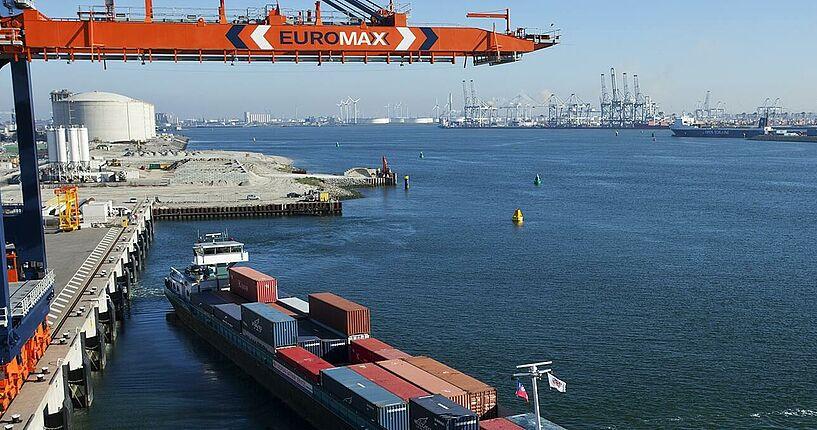
Metafuels will continue the development of its Turbe project in the Port of Rotterdam with the support of a grant worth 1.92 million euros. According to a statement issued by the company based in Adliswil in the Swiss canton of Zurich, the state-owned innovation agency of the Netherlands, Rijksdienst voor Ondernemend Nederland, is providing this funding for the construction of a plant for Aerobrew, the synthetic sustainable aviation fuel (e-SAF) developed by Metafuels. The plant is being built in the Port of Rotterdam on the premises of Evos, an Amsterdam-based company specializing in the storage of liquid energy carriers and chemicals.
Turbe will be the first commercial deployment of Metafuels’ proprietary methanol-to-jet technology and is designed as a blueprint for future large-scale plants. In Phase 1, this plant is expected to produce 10 tons of synthetic aviation fuel daily from green methanol starting in 2028. Phase 2 will begin three years later, at which point production will be ramped up to at least 100 tons per day.
“The project benefits from Rotterdam’s world-class infrastructure and aligns with Europe’s ambition to scale low-carbon fuels under frameworks such as ReFuelEU Aviation”, as Metafuels writes in the statement, adding that “this grant supports key development activities as we continue to advance a scalable, cost-competitive pathway to aviation decarbonization”.
The innovative catalytic system is based on advances in nanotechnology and forms the core of Aerobrew. The technology was validated by Metafuels in conjunction with the Paul Scherrer Institute in a pilot plant put into operation at the latter’s campus in Villigen in the canton of Aargau in 2025. The Swiss Federal Office of Energy supported the project with a grant of 4.4 million Swiss francs.
In February 2026, Metafuels raised a sum of 24 million US dollars in a funding round. At the time, CEO Saurabh Kapoor commented: “With Aerobrew, we are building a pathway that allows airlines to decarbonize without changing how they operate – and that has the potential to fundamentally reshape the future of flight”. ce/mm